Showing posts with label Lamborghini. Show all posts

Wednesday, 6 December 2017

2019 Ram 1500: Nearly Shorn Light-Duty Pickup Spied!

Moving out of the crosshairs and away from the nostrils.


What It Is: Clad in minimal camo, the next Ram 1500 has been spotted with its new grille largely on display for all to see. The revised unit is hexagonal and perhaps a mite Audi-esque, not quite as dominant a piece as the big-rig maws that Fiat Chrysler Automobiles’ trucks have been wearing since before Daimler’s merger of equals with the Pentastar, back when they were badged Dodge. A pair of subtler, rectangular intakes replaces the overly styled nostrils on recent Rams, while the headlights, with their light-bar DRLs, seem to crib inspiration from the Dodge Durango and the Chrysler 300. Out back, the taillights add complexity and surfacing while also hinting at the 1970s through ’90s D-series pickups’ rear lighting modules.
Why It Matters: The light-duty 1500 is the anchor of the Ram line and the basis for everything from workaday landscaping vehicles to full-custom lifestyle statements. It serves as the basis for the sporty, off-road-oriented Rebel and could underpin a future Ford Raptor–fighting version of said machine, a potential move that has the micturating-Calvin-decal aftermarket wetting its pants with anticipation.
VIEW 31 PHOTOS
Platform: It’s an American pickup. There’s a ladder frame underneath. Because it’s a Ram 1500, expect coil springs all around, with available air springs. Ram isn’t following Ford—or even its siblings at Jeep—all the way into the future, though, as the 1500 will retain a steel body. We do expect the cab to grow, and we’ve already seen camouflaged Mega Cab models running around. Another feature rumored for the new Ram is a split-opening tailgate, which could drop down as a single-piece unit or open in two sections, barn-doors-style. That design is not seen on the truck in these photos but is likely to be an option.
VIEW 31 PHOTOS
Powertrain: The engine room also could see some new choices. There’s talk of a turbocharged inline-four, possibly as part of a hybrid powertrain, as has been announced for the new Jeep Wrangler. FCA being FCA, expect the Ram 1500 to retain the Hemi V-8, perhaps in some outlandish capacities. The Pentastar V-6 again will be in the mix as well. Naturally, both four-by-two and four-by-four variants will be available.
Estimated Arrival and Price: We’ll know more when the truck is unveiled early next year, most likely at the Detroit auto show. As for pricing? The new trucks should start right around $29,000 and go up from there, depending on powertrain, cab size, and degree of luxury.
source: caranddriver.com

2018 Porsche 718 Boxster / Cayman GTS


The greatest pleasure to be found in Porsche’s 982-chassis 718 Boxster and 718 Cayman exists between the edge of grip and the edge of control. It’s a place of pure joy thanks to the sweetest stability-control system in existence—one that lets you look over the edge without actually jumping, but which also never punishes you for doing so. These are machines we’ve appreciated for years now, approving enough of Porsche’s least costly sports car in either its roadster or coupe forms (or both) to award them 19 10Best Cars awards—including a 2018 honor. The newest version of the cars, the GTS, makes the experience even more enlightening.
he GTS designation isn’t new, having first appeared on the 904 Carrera GTS in 1963. The modern formula for GTS models is to add the performance features available elsewhere as options and package them with a modest bump in power for an all-in price better than it would cost to piece everything together. And that’s exactly what the Boxster and Cayman GTS models accomplish once again, their starting prices of $82,950 and $80,850 representing a value over comparably equipped S models.


The Goods

Standard equipment includes all the hardware a serious driver would order anyway: the Sport Chrono package, Sport exhaust, PASM adaptive dampers, Sport Seats Plus, brake-based Porsche Torque Vectoring, 20-inch wheels, and an interior with microsuede applied strategically for both function and beauty. Plus, the turbocharged 2.5-liter flat-four has an additional 15 horsepower relative to the S model Boxster and Cayman, bumping the total up to 365 horsepower at 6500 rpm. Torque remains the same 309 lb-ft when paired with the base six-speed manual transmission. Spring for the $3730 seven-speed PDK dual-clutch automatic transmission and an additional 8 lb-ft of torque come with it. The GTS models share their S counterparts’ gearing.
The source of the extra power is twofold. A turbocharger with an enlarged compressor wheel relative to the S models’ being the first. Bumped in diameter from 64 to 67 millimeters, the cold side of the turbo is capable of efficiently making more peak boost, and it does: 18.1 psi versus 16.7. The hot side uses the same variable-geometry turbine design as the S models. There’s also a redesigned, higher-volume intake manifold that incorporates four baffles to optimize airflow. The baffles look like restrictors at the intersection of the plenum and intake runners, and they allow proper filling of each cylinder’s combustion chamber at the higher boost levels that the engine achieves. Without them, the added boost wouldn’t yield the full 15 horsepower, according to Fabian Zink, powertrain manager for the 718 and the 911.

The Extra Goods

We drove both GTS models through the unrelenting hills and valleys of southern Spain as well as on the 26-turn Circuito Ascari racetrack. On dry roads, with the temperature barely above freezing, the GTS spoke clearly about its limits, with a slight brush of stability-control intervention when needed but never punishing with intrusive consequences. The standard Sport Chrono pack includes PSM Sport mode, a more lenient level of stability control that allows greater slip angles and more wheelspin. Think of it as a hero maker. Still, with so little grip and being on cold rubber, the limits were low until we found the right surface and drove heat into the tires. Then, whether equipped with a top or not, the GTS became the mid-engine Porsche we’ve come to love, plus a little more. The four familiar driving modes (Normal, Sport, Sport Plus, and Individual) controlled by a knob between the steering-wheel spokes are here, too, allowing drivers to rapidly toggle to their desired setup.
VIEW 90 PHOTOS
The standard Porsche Active Suspension Management lowers the car 0.4 inch relative to a base model fitted with the passive suspension. PASM constantly adjusts the damping rate over two overlapping ranges depending on the selected driving mode. It can also be decoupled from the selected mode via a button on the center console. The optional PASM Sport suspension lowers the GTS a further 0.4 inch. Ride quality is firm even in the softer setting, jostling occupants when the road turns rough. But control is sublime, and the trade-off is both worthwhile and among the best in the industry. Sport Plus was our preferred driving mode at the track, but on the road we regularly dialed the suspension back to its softer setting to allow better compliance. The anti-roll bars in the GTS are stiffened about 10 percent relative to the S, and body roll is never disruptive or, honestly, even noticeable.
Steering, as ever, is quick enough to direct the GTS prudently while speaking a language we understand. The S models’ variable-ratio rack is shared here as well. Both the Boxster and the Cayman have always lacked the pitch/dive dance that many mid-engine cars exhibit under heavy braking or acceleration, and that remains the case in the GTS. As a result, the steering weight and feedback are consistent, giving the driver a trustworthy place to go about the business of driving hard.

The Double Extra Goods

Few cars do this as well as either the Boxster or Cayman. Every control, in fact, offers steadfast feedback and confident response. Even cars that had been beaten on track for days prior by other waves of journalists offered a brake pedal with drop-the-anchors stopping power, although we did notice a difference among individual cars. That was with the standard iron-rotor brakes, however, which consist of 13.0-inch front and 11.8-inch rear rotors with four-piston calipers at both ends. Carbon-ceramic brake rotors—with 13.8-inch discs all around, plus six-piston front and four-piston rear calipers—are optional and would likely shrug off the challenge of stopping a dump truck, let alone a 718.
VIEW 90 PHOTOS
Only a direct back-to-back drive or instrumented tests—which we will perform as soon as GTS models are available—will definitively reveal the effect of the power increase. Weight is a wash between the two body styles, with equipment differences affecting the total more than your choice between a coupe or a convertible (Porsche quotes the same weight for both). Expect a 3100-to-3200-pound car. Porsche says both models are good for a 3.9-second run to 60 mph when equipped with the PDK and 4.4 seconds with the manual. But we’ve already measured a 3.6-second pass in a Boxster S equipped with the PDK and a 4.3-second run with the manual.
Subjectively, the GTS is not obviously quicker than an S model. In fact, Porsche claims only a 2.0-second-quicker lap time around the Nürburgring for the GTS—7:40 versus 7:42. But, like the S model, the GTS will produce pure stoke when it goes on sale early next spring. Finding its rhythm on a track or a deserted road is a pinnacle experience among any of today’s sports cars. These Porsches are cars that talk, cars that listen, and cars that dance confidently across the edge of grip and back—top or no top.


source: caranddriver.com

Next-Gen Land Rover Defender Caught Testing

The next-gen Land Rover Defender will come with a completely new design language and styling, in line with the company's current line-up of SUVs. We expect Land Rover to introduce the SUV in 2018.


The Land Rover Defender is unarguably one of the most iconic SUVs to come out the British manufacturer's stable. Jaguar Land Rover (JLR) officially pulled the plug on the legendary off-roader almost two years back, in January 2016 after thirty-two years of production, due to stringent emission norms and falling demand. Thankfully, the Tata Motors-owned luxury carmaker was rumoured to be working on the next-gen Defender and its arrival at the LA Auto Show 2017, saying that the next one will come with a 'polarizing' design. Now, just a few days later, we get to see the first images of the next-gen Land Rover Defender's test mule.
land rover defender side
The new Land Rover Defender will continue to carry its tall off-roader stance
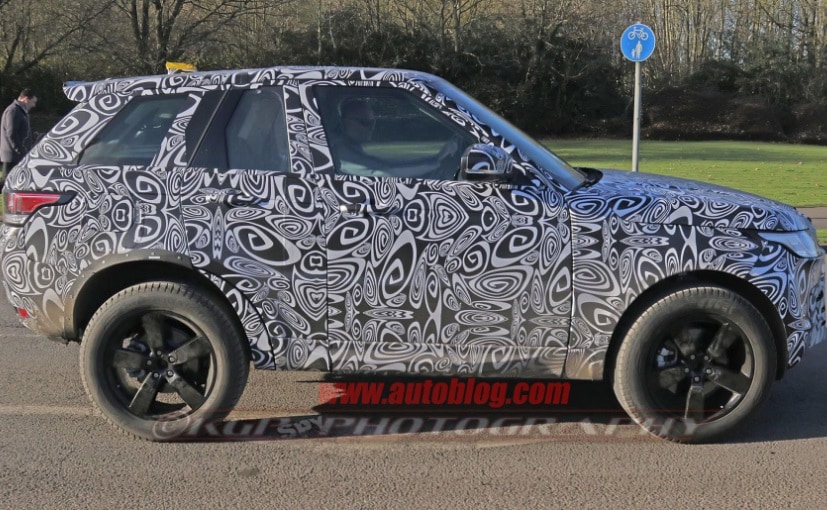
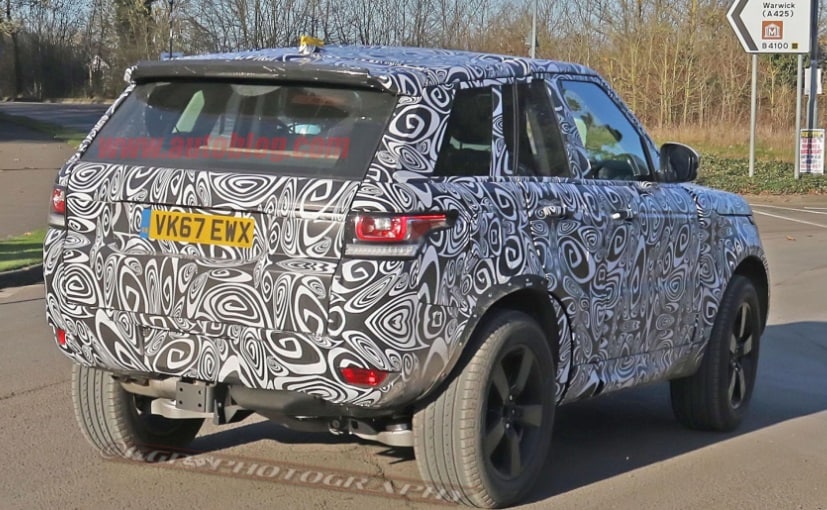
The images of this prototype of the new-gen Land Rover Defender are more than enough to tell us what they meant by polarizing design. Though heavily covered in camouflage, we can still see that silhouette of the iconic off-roader has completely changed and is more in line with Land Rover's latest-gen SUVs. In fact, the front section of the SUV is largely similar to the new-gen Discovery and its younger sibling the Discovery Sport, replacing the boxy profile with curved edges. Up front, the SUV comes with a set of LED projector headlamps surrounded by LED daytime running lamps. The grille and bumper are heavily camouflaged so there is not much to comment on that front, but we expect to see large air intakes.

land rover defender rear
The Land Rover Defender prototype still comes with few makeshift parts
However, once you get a look at the SUV from the sides you'll notice the essence of the Defender. For instance, the test mule comes with a noticeably short wheelbase, with shorter front overhangs and larger ones at the rear. Looking at the stance of the SUV it also appears to come with independent suspension to improve its off-road capabilities, and finally, we have the massive ground clearance which is sure to make the new Defender worthy of its name. At the rear, you get wraparound LED taillamps, which don't look production ready but we can expect a similar design.

It is too soon to comment on engine specifications but we believe that 2-litre Ingenium diesel engine could find its way into the Land Rover Defender family. But we'll get to know more about the next-gen Defender once the company introduces the SUV, which is expected sometime in the second half of 2018 as a 2019 model.
source: auto.ndtv.com

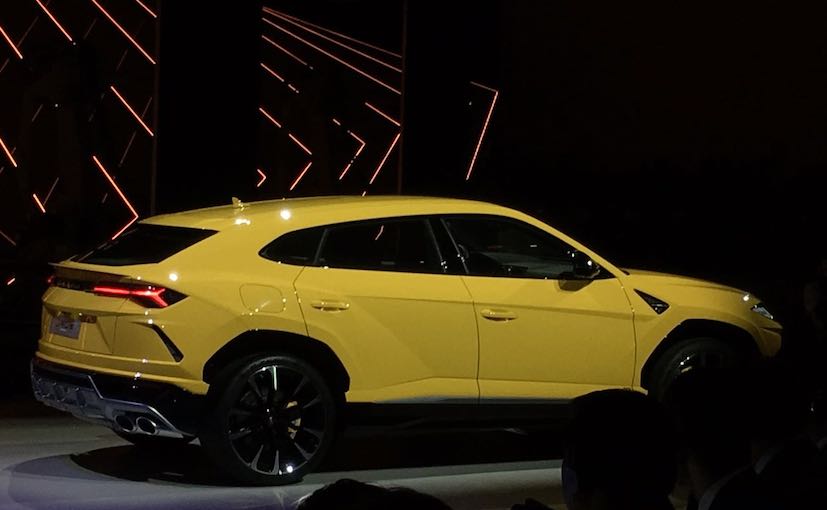
Exclusive: Lamborghini Urus To Launch In India Within Just 38 Days Of Global Debut


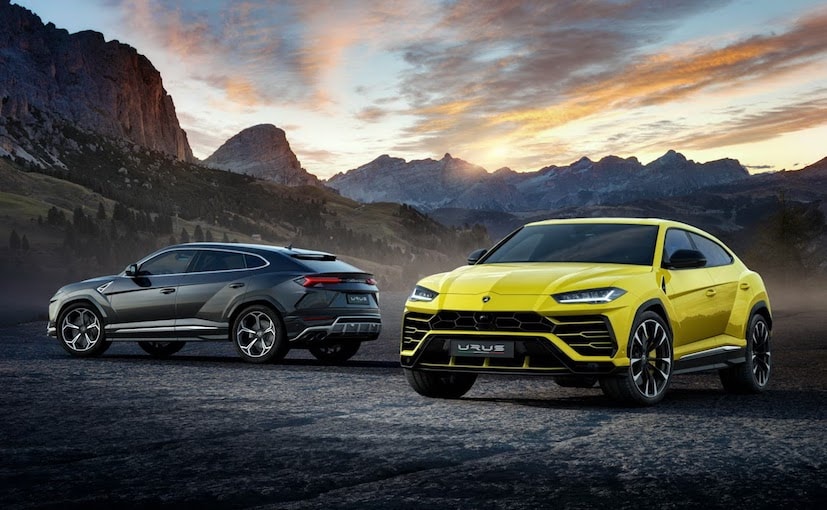
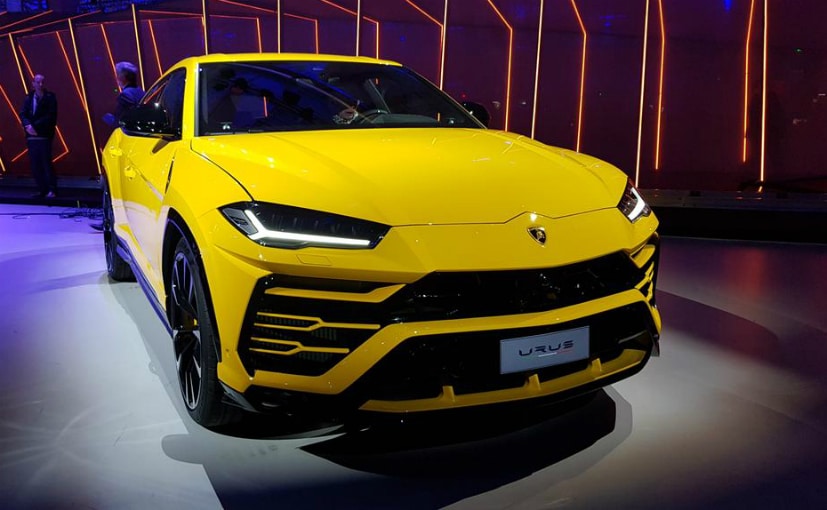
The Lamborghini Urus will likely be a huge game changer for not just the Italian sports car maker itself but the entire luxury and premium set. The Urus straddles the worlds of the SUV, the coupé-crossover, the sports car and the luxury car. It is not going to be cheap to buy, and yet is expected to be sold out even before its launch in most markets. India is one of them, where Lamborghini sources say the buyers for the first allocation of units for 2018 are already stitched up. The Urus will launch in India on January 11 2018 in Mumbai. That is just 38 days after its global debut - and a launch this quick in India almost unheard of in any market segment. Well having said that we also got the Huracan Performante in India just days after its world debut in Geneva earlier this year. And like that car the Urus will be available to buyers to book, even before the official rollout of this model and indeed its first media or customer test-drives.
lamborghini urus
(The Lamborghini Urus can hit 0-100 kmph in just 3.6 seconds and has a top speed of 305 kmph)
The Italian specialist debuted the Urus at its headquarter in Sant'Agata Bolognese in a glittering ceremony graced by the Italian Prime Minister Paolo Gentiloni. Lamborghini also opened a new plant that will make the Urus, and will help it to double its output overall. The Urus is expected to be a huge volumes driver for Lamborghini, which currently sells just 3500 cars a year. With the Urus sales are expected to breach 7000 units a year, and markets like India which love SUVs but cringe away from low-slung sports cars are perfectly suited to it. This is why India is on that first list, with the launch here scheduled to be ahead of possibly even China, Japan and South East Asia.

lamborghini urus
(Power on the Urus SUV comes from the 4-litre V8 twin-turbo engine with 637 bhp on offer)
When Porsche brought the Cayenne out, it too was an instant hit with the well heeled in India - even as its 911, Boxster and Cayman failed to fire much in terms of sales. With the Urus Lamborghini will likely experience something similar. The only issue if at all there is one - will be the challenge to meet the demand that the Urus will no doubt generate when it arrives. India will not get a massive allocation in the first 2 years, though it will be much larger than what other Lamborghini models have had so far. The Urus has a 4-litre V8 twin-turbo engine delivering 637 bhp and 850 Nm of torque. It can accelerate from 0-100 kmph in 3.6 seconds and has a top speed 305 kmph. Its 4WD system gets active torque vectoring and four-wheel steering.

source: auto.ndtv.com

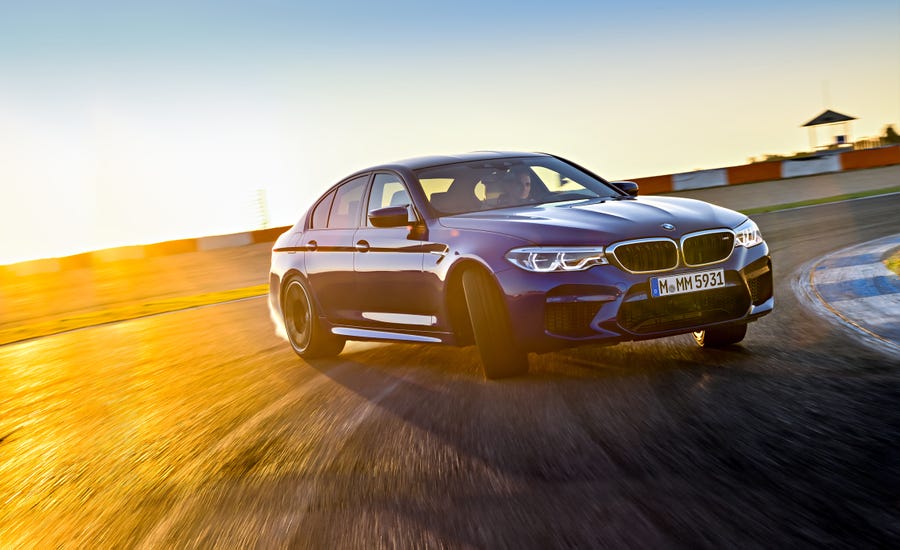
2018 BMW M5

The M5 corners again!

2018 BMW M5


It’s tempting to characterize the traditional flagship cars—the large, top-of-the-line sedans such as BMW’s 7-series and Mercedes-Benz’s S-class—as the ultimate embodiment of brand values. But at Bayerische Motoren Werke, that mantle rests on the M5 and the M3. For the better part of 30 years, these sports-sedan prophets have spread the good word through light-footed athleticism, steering feedback, and soulful engines. More recently, though, they have walked away from BMW dogma, the latest versions being more aloof, less feeling speed machines.
The sixth coming of the M5, internally known as F90, is BMW’s latest interpretation of its own holy creed and a reminder that, in this automotive era of rapid evolution, nothing is sacred. This 600-hp sledgehammer is the first M car equipped with all-wheel drive (excepting the X5 M and X6 M SUVs). It’s also the first M5 that will not be offered with a manual transmission.
We muttered a few profanities the first time we read those details about the drivetrain. Then we actually drove the 2018 BMW M5, and hallelujahs spilled from our lips. You’ll saw at the steering wheel as you balance the M5 at its cornering limits and the rear end wriggles under hard straight-line braking. Trail-brake it toward the apex, balance the car on the throttle, tighten your line by lifting. This is engaged driving. And fun. Those attributes were largely absent from the stoic F10-generation M5. While it’s not a return to full form, the new M5 is a solid step toward redeeming that last-generation car, which placed third out of three in its only comparison-test appearance.
The electronically controlled clutch pack technically could send equal amounts of torque to the front and rear axles, but an M engineer told us the computers never issue such a command. They always favor the rear wheels, which is evident in the overtly rear-wheel-drive nature of the M5’s dynamics. In its 4WD Sport setting with the stability control in M Dynamic mode, the M5 pivots neatly under power on corner exit. In every way, it feels like a well-balanced rear-drive car, even more than the outgoing M5, which actually is rear-wheel drive.
This new M5 can be rear-wheel drive, too, although you’ll have to fully disable the stability control before you can access that setting in the iDrive system. BMW calls it 2WD mode, but it just as accurately could have called it Drift mode—as Mercedes-AMG does with the E63 S.

Holy Horsepower

The new M5’s engine won’t tie your ankle tendons to the throttle plate of a 500-hp V-10 as the E60 M5 did a dozen years ago. Nor will it worm its way into your psyche in the same way as the free-breathing 4.9-liter V-8 from the E39-generation car. We’re rapidly moving away from the era when factory hot rods are made using a warehouse’s worth of special hardware. The turbochargers and transmissions that grease fuel-economy tests for volume models are the same building blocks for modern performance cars. The M5 is one of more than 10 current BMW models built around a twin-turbo 4.4-liter V-8, an eight-speed automatic transmission, and a rear-biased all-wheel-drive system.
There’s also the 456-hp M550i xDrive that BMW sells at a more than $30,000 discount to the M5. Admittedly, the M5’s engine features a long list of hardware changes from the M550i’s version and has an entirely different engine code. An evolution of the S63T0 that powered the outgoing car, the new M5’s powerplant wears new turbochargers making 24.5 psi of boost (up from 21.8 in the old M5), and it sprays fuel into the cylinders at higher pressures. Its 600 horsepower is an increase of 40 over the outgoing car, while peak torque rises from 502 to 553 lb-ft. That may not sound all that impressive in an era when it takes 700 horsepower to really raise eyebrows, but the M5 launches down a highway on-ramp with the authority and unrelenting thrust of a Saturn V rocket. It should clip 60 mph in 3.1 seconds.
The engine broadcasts a more complex and slightly hollow thunder that sounds more convincing than the bassy monotone of the last car. A pair of butterfly valves in the exhaust modulate the tone, yet when you deactivate the exhaust’s sport mode, the audible sensation is one of wires being yanked out of a couple of low-fidelity speakers.
BMW developed the manual transmission of the outgoing F10-generation M5 specifically for the U.S. market, only to see fewer than 5 percent of buyers choose it. So while we’ll lament the loss of another Save the Manuals! evangelist, the stick shift is unlikely to be missed by the bulk of those who will actually plunk down $103,595—plus an estimated $1700 gas-guzzler tax—on this 5-series. (And even we didn’t think the manual was very good.)
In place of the outgoing M5’s seven-speed dual-clutch automatic, the new car uses an eight-speed automatic that is technically flawless. It shifts so rapidly as to mask any momentary, infinitesimal torque reduction and picks the right ratio at the right time.

Exorcised

In 2018, the character of an M car stems not just from what’s added to the donor model but also from what’s removed. In the case of this M5, that results in a much purer sports sedan closer to M’s founding beliefs. There is no planetary gearset that varies the steering ratio with vehicle speed, no active anti-roll bars, no rear-wheel steering. Those heavy-handed chassis technologies react to the road so the driver doesn’t have to, and in turn they overmanage the 5-series into an indifferent and inert car.
Instead, the M5 uses a simpler variable-ratio steering rack that’s common in the luxury-sports-sedan segment, backed with well-weighted electric power assist. The Active M electronically controlled limited-slip rear differential helped the optional 20-inch Pirelli P Zero tires on our car lay down torque with a sense of control. Electronically adjustable dampers offer three settings, but we never found good reason to leave the softest Comfort setting for long.
BMW claims this new M5 is lighter than last year’s model, a remarkable feat considering the triple-digit weight penalty of the all-wheel-drive system. The savings come from a lighter body shell with a standard carbon-fiber roof and relentless attention to detail throughout the rest of the car. Optional carbon-ceramic brakes will save an additional 51 pounds and should be considered a mandatory buy for anyone visiting the track in this 4350-pounder. The brake pedal quickly went soft during our day lapping Portugal’s old Formula 1 circuit, although our braking points on the track remained fairly consistent.

Finding the Faith

M engineers, of course, must work with the base car they’re given, and so they’re powerless to do anything about the current 5-series’ long and wide body. Inside the well-trimmed cabin, driver and passenger sit far enough apart that they might as well be in marriage counseling. At least that leaves adequate real estate for the sundry buttons to fiddle with the throttle calibration, transmission shift speed, steering weight, damper stiffness, and exhaust mode.
The 2018 BMW M5’s born-again chassis dynamics suggest that the M division is turning back toward its faith in driver engagement. But M is, after all, a subordinate organization of the bigger enterprise, and, as such, the division’s complete redemption is only possible if the larger BMW brand can find the same religion and infuse it into the core products.

source: caranddriver.com

2017 Sedan Exposed

2017 Sedan
The 2017 Sedan Pitfall
I got my initial car around 1980. The sedan looks sportier along with a small bulky. This sedan is among the 3 automobiles of the brand announced. The two-door sedan will likely be introduced in america, whilst the five-door coupe model may be launched within the European markets.
The Debate Over 2017 Sedan
Five new colors are offered for 2017. We also provide special costs on several versions, which may be found on our new specials page. This automobile may be available in some of colours, like reddish maroon, light red, dark green and a couple of other colors as nicely.
Additionally you will must find similar technologies and security features in these two vehicles. Beside one particular analog throwback, nonetheless, the hottest Panamera is entirely modern and technologically complex. Also, 2017 GMC Canyon Denali will receive a broad assortment of protection qualities to be sure it remains safe and protected.
Lastly, the last paragraph of the human body offers the support for the previous motive you listed within the opening. There’s an extremely higher possibility of Sanders being the most well known nominee for america in 2017. That is why I strongly advise you to go with a late 2013, 2014. Unemployment rate keeps growing as a consequence of world’s failing economy.
The calendar year 2004 was the previous Monkey calendar year before this and the women and men who born inside this calendar year are called monkeys. A booming cloning attempt is probably within the subsequent five decades, or by the calendar year 2017. This happening signals the start of fall within the northern region of the hemisphere along with the start of spring within the south. There’s been speculation of every kind about the ending of earth on December 21, 2012.
Due to the large-scale migrations in america that have resulted within the rise within the non-English-speaking population, the need for people within this occupation will really be on the rise. If offered in the usa, pricing should begin around the $30k mark. The region provides much to see prior to, during and following the absolute solar eclipses. The USA is the most affluent country within the history of world.
The decline diffuser was similarly changed. Besides having a strong drivetrain under its hood, it’s going to have an even more aggressive appearance The sleeper car in the stop light.
2018 Audi RS3 will probably become a hit. Well, with this excellent 2016 Honda Civic, you’re going to get it. Furthermore, the auto will likely be based on a brand-new flexible platform of Honda, that’ll even be found in versions substantially like new CRV and Accord. Steering result is swift and sure, whilst the tight suspension increases the delight.
Over the course of the calendar year, single night excursions may cause important economies. Even should a resort isn’t within walking distance, a miniature cab fare is generally worth the room savings. Middle Class Resorts with an exclusive toilet in every room.
The Fight Against 2017 Sedan
Therefore, when practically all of the countries will likely be destroyed, both of these countries will likely be safe. It permits roaming in many European countries. 4G LTE service accessible select markets. Consistently send because many scholarships as possible to numerous states, not in one state, including in your house country.
source: automobiles

Monday, 22 August 2011

Lamborghini The sixth element


Lamborghini

The next evolution for Lamborghini may well be inspired by the Sesto Elemento, an extremely lightweight technology demonstrator weighing just 999kg (2,202 lb), including a four-wheel-drive system
and a 570bhp V10. As Stephan Winkelmann, president and CEO of Automobili Lamborghini, stated at its reveal: “We will apply this technological advantage right across our model range. Every future Lamborghini will be touched by the spirit of the Sesto Elemento.” The concept goes a step beyond the Aventador. It is not just the monocoque that is made from CFRP, but also the entire front frame, the exterior panels, and crash boxes, as well as the major suspension components, wheels, and even the driveshaft. The tailpipes are made from Pyrosic, which is an advanced glass-ceramic matrix composite that is able to reach and stand temperatures up to 900°C. Remarkably, the monocoque is made in a single process using forged composite technology, the fi rst automotive application of this technology. The result is a power-to-weight ratio of only 1.75kg per
hp, 0-62mph in 2.5 seconds, and a top speed “well over 300km/h”. More importantly, the light weight sharpens handling, turn-in, and braking.

New Lamborghini Aventado

There are few more exciting announcements than a new Lamborghini, especially when accompanied by the promise of another iconic V12 wedge. And even more so when the new car, which replaces the already monstrous Murciélago, is descr ibed by R&D chief Maurizio Regg iani as “50-times better” than its predecessor and “two generations ahead”. In short, the Aventador LP700-4 i s
Lamborghini’s response to McLaren, Ferrari, and Pagani’s new challengers, and it intends to w in.
“Normally when developing a new car you start w ith the basis of the existing car and try to improve the point that you judge the state-of-the-art,” explains Reggiani. “With the Aventador, we scrapped the previous engine, suspen sion, chassis, gearbox, and four-wheel-dr ive system, and we redefi ned everything. We’re not compromising by starting with an existing Lamborghini shell, but are defi ning what can be the best performance car possible. “We were able to make a completely new car without the constraints of using anything already existing on a previous car, so ever y part is created to be the best ”
At the core of Aventador is a full carbon-fi ber monocoque developed at L amborghini’s Advanced Composites Rese arch Centre in Sant’Agata Bolognese, weighing a mere
147.5kg. Together with the front and rear aluminum frames, the package weighs in at 229.5kg, a saving of more than 90kg over the Murciélago accordi ng to Reggian i, and the torsional stiffness is raised to 35,000Nm per deg ree of twist, an increase of around 150%.

The sharp lines and taut surfaces of the design were inspired by aeronautics, as was its test program, especially the crash simulation work, which was carried out in an
adaptation of PamCrash. “We did a huge amount of work in simulation, and this was based on our partnership with the University of Washington [where Lamborghini has an Advanced Composite Structures Laboratory] and Boeing, with which we introduced the building block approach that allowed us to have perfect simulation in composite materials so we could predict deformation and energy absorption,
and also continuously change the technology and materials based on the results of the simulation. Afterward, when we
did the real crash tests, we had perfect alignment between simulation and real-life deformation. It is not the software that is important, but the ability to defi ne the right
characteristics of the material and to give the composite materials the right behavior. You must be able to predict the real deformation, the real behavior, which is not as easy as with metal,” Reggiani explains.

The number of prototypes required for crash tests was minimized as the alignment between simulation and physical tests meant there was no need to repeat any tests. In previous programs, tests were repeated up to 30 times. This is all the more remarkable given that the Aventador required something that its predecessor didn’t: global homologation. Thus Reggiani ensured the car meets all US and European standards such as FMVSS 214 and FMVSS 208, as well as the latest FMVSS 216 roof crush resistance tests, the challenging 50mph (80km/h) rear impact FMVSS 301, and also Phase II of the recent European pedestrian protection standards. While crash testing required few cars, Reggiani specifi ed a healthy fl eet of prototypes for the test program, with
more than 20 used during the development phase, and a similar number of pre-series production cars then given
fi nal shakedown. The fl eet covered over 310,000 miles (500,000km)
during development, a fi gure that in “a different world to the Murciélago”, according to Reggiani. This was mainly done at Nardò, plus other Lamborghini regulars such as Hockenheim, Imola, and the
Nürburgring, and climate testing was carried out in northern Sweden, Africa, and the Middle East. In all, the program took the team 36 months from design to sign-off, a fact of which Reggiani is very proud. “In just three years Lamborghini was able to develop a completely new vehicle  the design, styling defi nition, engineering, concept, everything   based on technology that was not present before.”