Showing posts with label renault. Show all posts

Wednesday, 6 December 2017

2019 Jaguar I-Pace


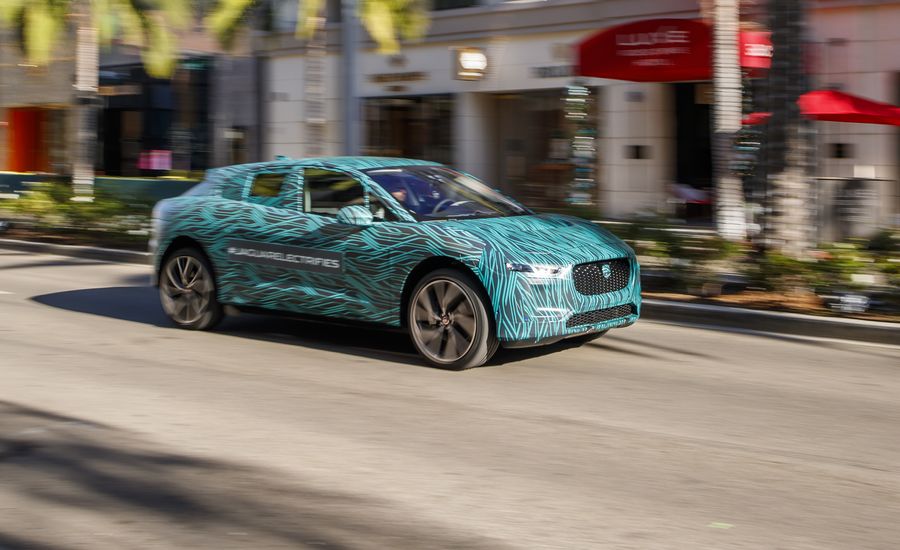
The I-Pace is Jaguar’s first electric vehicle, and although it’s still months away from showrooms, we got a ride in a preproduction prototype built using the final tooling. Jaguar isn’t doing the final assembly for the I-Pace; instead, Magna Steyr, the contract builders of the Mercedes-Benz G-class and the BMW 5-series, will screw them together in Graz, Austria. Despite not driving the Jag ourselves—that will come later—we did learn a bit more about the I-Pace even as company executives remain largely tight lipped regarding final specs, how much it will cost, how quickly it will charge, and whether Jaguar will be making any infrastructure investments like Tesla.
The I-Pace will go on sale late next summer in Europe and should arrive in the United States in the fall. Most of the stats that Jaguar would discuss were lifted directly from the concept version shown a year ago. A range of more than 200 miles is promised, made possible by a 90.0-kWh battery pack that uses pouch-type lithium-ion cells. Jaguar is employing an outside supplier for its batteries; we’re guessing it’s Panasonic, given the Panasonic/Jaguar partnership in the Formula E electric racing series. In contrast, the two identical electric motors that move the I-Pace were designed in-house. One is located up front and the other at the rear, each independently driving an axle; together they provide all-wheel drive and a default 50/50 front-to-rear torque split that can be altered to adapt to slippery conditions. The motors also can perform this trick in the interest of efficiency. Each motor is good for 200 horsepower and 258 lb-ft of torque, for totals of 400 horses and 516 lb-ft.
VIEW 28 PHOTOS
Despite the camouflage wrap concealing the look of the crossover’s aluminum body, we could see that the I-Pace has an interesting vent in the hood that allows air to pass over the exit of the radiators and help extract heat while, according to Jaguar, improving aerodynamics—a 0.29 drag coefficient is claimed. If you’re wondering why an EV has a radiator at all, the answer is that an EV’s battery needs to be cooled to remain in its optimal operating-temperature range, as they can generate a lot of heat when they’re being charged or quickly discharged. In this case, Jaguar’s solution is liquid cooling via coolant, a radiator, and a circulating pump.
From the passenger seat, the I-Pace experience is pretty typical of most electric cars. There’s a largely hushed whirring from the motors—in the prototype this sound became particularly loud when the I-Pace was decelerating and recharging its battery via regenerative braking, although Jaguar tells us that the production version may be quieter. Speaking of regenerative braking, two selectable modes are available. The first is more conventional, meaning you need to use the brake pedal more often, while the second is more aggressive and allows you to drive using only the accelerator. Lifting off the throttle provides enough braking force to slow the vehicle without having to apply the four-wheel disc brakes. The ride from the air-spring-equipped I-Pace we rode in was supple despite the large 22-inch wheels wrapped in 255/40 Pirelli P Zero tires.

Acceleration is quick and, as in a Tesla Model S, the power hits right away. Jaguar claimed a zero-to-60-mph time of 4.0 seconds when the concept was unveiled, and we have no reason to doubt that time. Inside, the seats are comfortable and there’s a decent amount of rear-seat space—about what you might find in Jaguar’s mid-size F-Pace crossover. Large pieces of cloth camouflage were draped over the interior, but we could see a touchscreen that appears to be shared with the rest of the Jaguar lineup.

Oh, and why is this vehicle called the I-Pace, when E-Pace—the name Jaguar is using for its new, conventionally powered compact SUV—seems to make more sense? The reason is that Jag’s Formula E race car is called the I-type, so the brand’s electric vehicles will get the letter I instead of the letter E. We still think E-Pace would be a better fit, but with that burning question answered, we now must wait until the I-Pace officially debuts in March to see the final styling and learn the rest of the details.
source: caranddriver.com

2018 Porsche 718 Boxster / Cayman GTS


The greatest pleasure to be found in Porsche’s 982-chassis 718 Boxster and 718 Cayman exists between the edge of grip and the edge of control. It’s a place of pure joy thanks to the sweetest stability-control system in existence—one that lets you look over the edge without actually jumping, but which also never punishes you for doing so. These are machines we’ve appreciated for years now, approving enough of Porsche’s least costly sports car in either its roadster or coupe forms (or both) to award them 19 10Best Cars awards—including a 2018 honor. The newest version of the cars, the GTS, makes the experience even more enlightening.
he GTS designation isn’t new, having first appeared on the 904 Carrera GTS in 1963. The modern formula for GTS models is to add the performance features available elsewhere as options and package them with a modest bump in power for an all-in price better than it would cost to piece everything together. And that’s exactly what the Boxster and Cayman GTS models accomplish once again, their starting prices of $82,950 and $80,850 representing a value over comparably equipped S models.


The Goods

Standard equipment includes all the hardware a serious driver would order anyway: the Sport Chrono package, Sport exhaust, PASM adaptive dampers, Sport Seats Plus, brake-based Porsche Torque Vectoring, 20-inch wheels, and an interior with microsuede applied strategically for both function and beauty. Plus, the turbocharged 2.5-liter flat-four has an additional 15 horsepower relative to the S model Boxster and Cayman, bumping the total up to 365 horsepower at 6500 rpm. Torque remains the same 309 lb-ft when paired with the base six-speed manual transmission. Spring for the $3730 seven-speed PDK dual-clutch automatic transmission and an additional 8 lb-ft of torque come with it. The GTS models share their S counterparts’ gearing.
The source of the extra power is twofold. A turbocharger with an enlarged compressor wheel relative to the S models’ being the first. Bumped in diameter from 64 to 67 millimeters, the cold side of the turbo is capable of efficiently making more peak boost, and it does: 18.1 psi versus 16.7. The hot side uses the same variable-geometry turbine design as the S models. There’s also a redesigned, higher-volume intake manifold that incorporates four baffles to optimize airflow. The baffles look like restrictors at the intersection of the plenum and intake runners, and they allow proper filling of each cylinder’s combustion chamber at the higher boost levels that the engine achieves. Without them, the added boost wouldn’t yield the full 15 horsepower, according to Fabian Zink, powertrain manager for the 718 and the 911.

The Extra Goods

We drove both GTS models through the unrelenting hills and valleys of southern Spain as well as on the 26-turn Circuito Ascari racetrack. On dry roads, with the temperature barely above freezing, the GTS spoke clearly about its limits, with a slight brush of stability-control intervention when needed but never punishing with intrusive consequences. The standard Sport Chrono pack includes PSM Sport mode, a more lenient level of stability control that allows greater slip angles and more wheelspin. Think of it as a hero maker. Still, with so little grip and being on cold rubber, the limits were low until we found the right surface and drove heat into the tires. Then, whether equipped with a top or not, the GTS became the mid-engine Porsche we’ve come to love, plus a little more. The four familiar driving modes (Normal, Sport, Sport Plus, and Individual) controlled by a knob between the steering-wheel spokes are here, too, allowing drivers to rapidly toggle to their desired setup.
VIEW 90 PHOTOS
The standard Porsche Active Suspension Management lowers the car 0.4 inch relative to a base model fitted with the passive suspension. PASM constantly adjusts the damping rate over two overlapping ranges depending on the selected driving mode. It can also be decoupled from the selected mode via a button on the center console. The optional PASM Sport suspension lowers the GTS a further 0.4 inch. Ride quality is firm even in the softer setting, jostling occupants when the road turns rough. But control is sublime, and the trade-off is both worthwhile and among the best in the industry. Sport Plus was our preferred driving mode at the track, but on the road we regularly dialed the suspension back to its softer setting to allow better compliance. The anti-roll bars in the GTS are stiffened about 10 percent relative to the S, and body roll is never disruptive or, honestly, even noticeable.
Steering, as ever, is quick enough to direct the GTS prudently while speaking a language we understand. The S models’ variable-ratio rack is shared here as well. Both the Boxster and the Cayman have always lacked the pitch/dive dance that many mid-engine cars exhibit under heavy braking or acceleration, and that remains the case in the GTS. As a result, the steering weight and feedback are consistent, giving the driver a trustworthy place to go about the business of driving hard.

The Double Extra Goods

Few cars do this as well as either the Boxster or Cayman. Every control, in fact, offers steadfast feedback and confident response. Even cars that had been beaten on track for days prior by other waves of journalists offered a brake pedal with drop-the-anchors stopping power, although we did notice a difference among individual cars. That was with the standard iron-rotor brakes, however, which consist of 13.0-inch front and 11.8-inch rear rotors with four-piston calipers at both ends. Carbon-ceramic brake rotors—with 13.8-inch discs all around, plus six-piston front and four-piston rear calipers—are optional and would likely shrug off the challenge of stopping a dump truck, let alone a 718.
VIEW 90 PHOTOS
Only a direct back-to-back drive or instrumented tests—which we will perform as soon as GTS models are available—will definitively reveal the effect of the power increase. Weight is a wash between the two body styles, with equipment differences affecting the total more than your choice between a coupe or a convertible (Porsche quotes the same weight for both). Expect a 3100-to-3200-pound car. Porsche says both models are good for a 3.9-second run to 60 mph when equipped with the PDK and 4.4 seconds with the manual. But we’ve already measured a 3.6-second pass in a Boxster S equipped with the PDK and a 4.3-second run with the manual.
Subjectively, the GTS is not obviously quicker than an S model. In fact, Porsche claims only a 2.0-second-quicker lap time around the Nürburgring for the GTS—7:40 versus 7:42. But, like the S model, the GTS will produce pure stoke when it goes on sale early next spring. Finding its rhythm on a track or a deserted road is a pinnacle experience among any of today’s sports cars. These Porsches are cars that talk, cars that listen, and cars that dance confidently across the edge of grip and back—top or no top.


source: caranddriver.com

Next-Gen Land Rover Defender Caught Testing

The next-gen Land Rover Defender will come with a completely new design language and styling, in line with the company's current line-up of SUVs. We expect Land Rover to introduce the SUV in 2018.


The Land Rover Defender is unarguably one of the most iconic SUVs to come out the British manufacturer's stable. Jaguar Land Rover (JLR) officially pulled the plug on the legendary off-roader almost two years back, in January 2016 after thirty-two years of production, due to stringent emission norms and falling demand. Thankfully, the Tata Motors-owned luxury carmaker was rumoured to be working on the next-gen Defender and its arrival at the LA Auto Show 2017, saying that the next one will come with a 'polarizing' design. Now, just a few days later, we get to see the first images of the next-gen Land Rover Defender's test mule.
land rover defender side
The new Land Rover Defender will continue to carry its tall off-roader stance
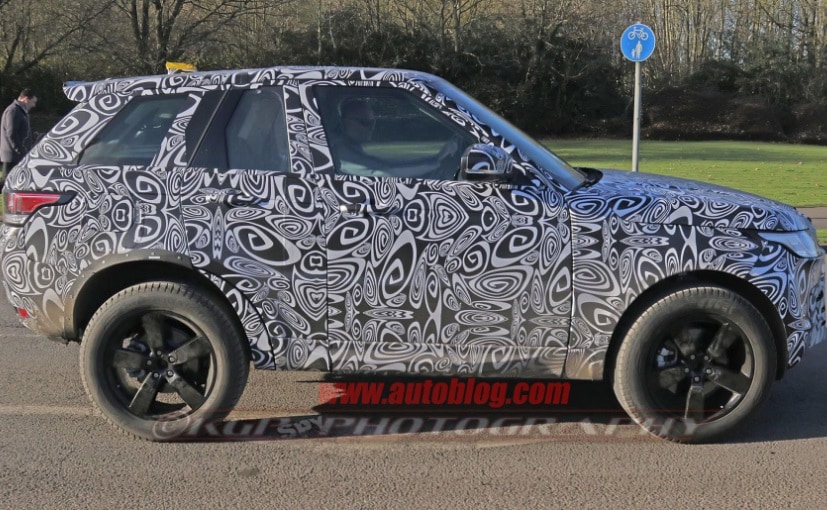
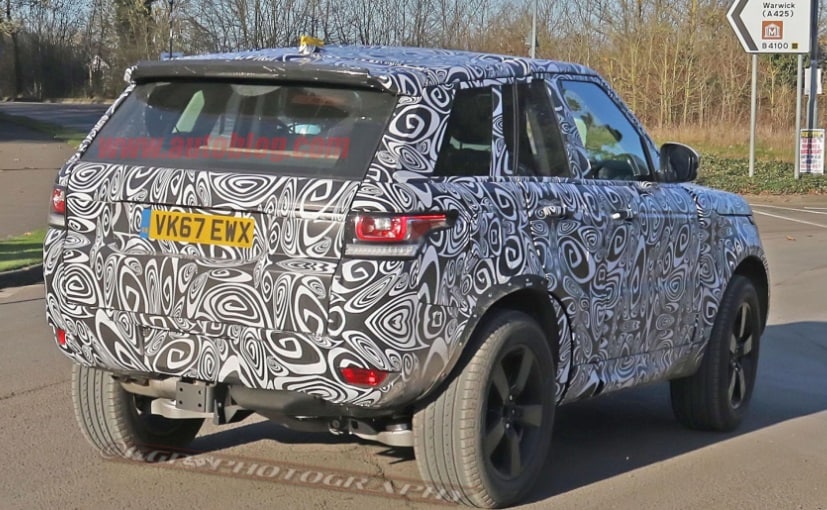
The images of this prototype of the new-gen Land Rover Defender are more than enough to tell us what they meant by polarizing design. Though heavily covered in camouflage, we can still see that silhouette of the iconic off-roader has completely changed and is more in line with Land Rover's latest-gen SUVs. In fact, the front section of the SUV is largely similar to the new-gen Discovery and its younger sibling the Discovery Sport, replacing the boxy profile with curved edges. Up front, the SUV comes with a set of LED projector headlamps surrounded by LED daytime running lamps. The grille and bumper are heavily camouflaged so there is not much to comment on that front, but we expect to see large air intakes.

land rover defender rear
The Land Rover Defender prototype still comes with few makeshift parts
However, once you get a look at the SUV from the sides you'll notice the essence of the Defender. For instance, the test mule comes with a noticeably short wheelbase, with shorter front overhangs and larger ones at the rear. Looking at the stance of the SUV it also appears to come with independent suspension to improve its off-road capabilities, and finally, we have the massive ground clearance which is sure to make the new Defender worthy of its name. At the rear, you get wraparound LED taillamps, which don't look production ready but we can expect a similar design.

It is too soon to comment on engine specifications but we believe that 2-litre Ingenium diesel engine could find its way into the Land Rover Defender family. But we'll get to know more about the next-gen Defender once the company introduces the SUV, which is expected sometime in the second half of 2018 as a 2019 model.
source: auto.ndtv.com

Renault Reportedly Working On Kwid-Based Compact MPV


The French carmaker is likely to consider launching a sub-4 metre people mover based on the Kwid’s platform before 2022!


Soon after announcing its “Drive The Future 2017-2022” strategic plan, Thierry Bollore, Renault’s chief competitive officer, said, “We will launch a compact MPV in the Indian market to transport many adults, but in a vehicle that is less than 4-metres length.” What this means for you and me is nothing but the introduction of a sub-4 metre MPV like the Datsun GO+ before 2022!
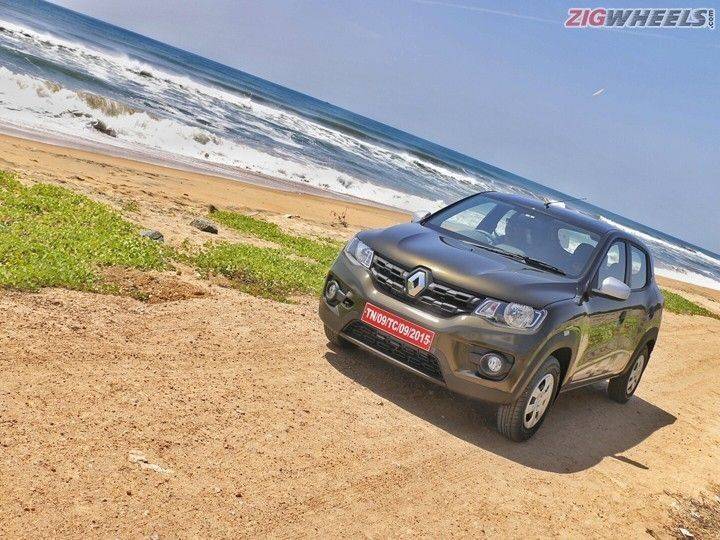
Unlike the GO+, however, Renault’s upcoming people mover is likely to be based on the CMF-A (Common Module Family Architecture) platform that underpins the Renault Kwid and the Datsun redi-GO. The CMF-A platform, jointly developed by Renault and Nissan, is a low-cost and flexible platform that allows the manufacturer to change the body style and powertrain options easily. The heavily localised platform should help Renault price the upcoming MPV competitively as well.
What’s more, the upcoming MPV is reported to be offered with seven seats. The only other MPV under sub-4 metres in length is the Datsun GO+, which is based on Nissan’s V-platform that also underpins the Micra hatchback currently sold in India. The upcoming MPV along with Renault’s other popular offerings like the Kwid, Duster, Lodgy and the Captur should help the manufacturer achieve a 5 per cent profitable market share in India. Earlier this year, MD and CEO of Renault India, Sumit Sawhney had said that Renault will expand its portfolio by launching one car every year. While the Kwid-based MPV is certainly one of them, other products that could be launched in India include the second-gen Duster (read more about it here), the Kwid EV, the new Koleos SUV, and a Megane-based sedan.
As far as powertrain options go, the carmaker hasn’t revealed any details yet. But we expect the people mover to be powered by the 1.2-litre, 3-cylinder petrol engine that also powers the Datsun GO and GO+. Renault could also plonk its acclaimed 1.5-litre diesel engine under the bonnet. This unit churns out 68PS of max power and a peak torque of 104Nm. As the upcoming MPV is likely to be based on the Kwid, expect Renault to offer it with a pretty competitive price tag. We expect it to cost between Rs 5 lakh and Rs 7 lakh (ex-showroom). As of now, the only other people mover in the same price point is Datsun’s GO+, which hasn’t had the kind of reception the Japanese budget carmaker hoped it would. So, could a similar offering from Renault loaded with all the bells and whistles that the Kwid boasts of prove successful in our cut-throat four-wheeler market? Well, we’ll have to wait till the MPV is launched here, won’t we?


source: zigwheels.com