Showing posts with label land rover. Show all posts

Wednesday, 6 December 2017

2019 Ram 1500: Nearly Shorn Light-Duty Pickup Spied!

Moving out of the crosshairs and away from the nostrils.


What It Is: Clad in minimal camo, the next Ram 1500 has been spotted with its new grille largely on display for all to see. The revised unit is hexagonal and perhaps a mite Audi-esque, not quite as dominant a piece as the big-rig maws that Fiat Chrysler Automobiles’ trucks have been wearing since before Daimler’s merger of equals with the Pentastar, back when they were badged Dodge. A pair of subtler, rectangular intakes replaces the overly styled nostrils on recent Rams, while the headlights, with their light-bar DRLs, seem to crib inspiration from the Dodge Durango and the Chrysler 300. Out back, the taillights add complexity and surfacing while also hinting at the 1970s through ’90s D-series pickups’ rear lighting modules.
Why It Matters: The light-duty 1500 is the anchor of the Ram line and the basis for everything from workaday landscaping vehicles to full-custom lifestyle statements. It serves as the basis for the sporty, off-road-oriented Rebel and could underpin a future Ford Raptor–fighting version of said machine, a potential move that has the micturating-Calvin-decal aftermarket wetting its pants with anticipation.
VIEW 31 PHOTOS
Platform: It’s an American pickup. There’s a ladder frame underneath. Because it’s a Ram 1500, expect coil springs all around, with available air springs. Ram isn’t following Ford—or even its siblings at Jeep—all the way into the future, though, as the 1500 will retain a steel body. We do expect the cab to grow, and we’ve already seen camouflaged Mega Cab models running around. Another feature rumored for the new Ram is a split-opening tailgate, which could drop down as a single-piece unit or open in two sections, barn-doors-style. That design is not seen on the truck in these photos but is likely to be an option.
VIEW 31 PHOTOS
Powertrain: The engine room also could see some new choices. There’s talk of a turbocharged inline-four, possibly as part of a hybrid powertrain, as has been announced for the new Jeep Wrangler. FCA being FCA, expect the Ram 1500 to retain the Hemi V-8, perhaps in some outlandish capacities. The Pentastar V-6 again will be in the mix as well. Naturally, both four-by-two and four-by-four variants will be available.
Estimated Arrival and Price: We’ll know more when the truck is unveiled early next year, most likely at the Detroit auto show. As for pricing? The new trucks should start right around $29,000 and go up from there, depending on powertrain, cab size, and degree of luxury.
source: caranddriver.com

2018 Porsche 718 Boxster / Cayman GTS


The greatest pleasure to be found in Porsche’s 982-chassis 718 Boxster and 718 Cayman exists between the edge of grip and the edge of control. It’s a place of pure joy thanks to the sweetest stability-control system in existence—one that lets you look over the edge without actually jumping, but which also never punishes you for doing so. These are machines we’ve appreciated for years now, approving enough of Porsche’s least costly sports car in either its roadster or coupe forms (or both) to award them 19 10Best Cars awards—including a 2018 honor. The newest version of the cars, the GTS, makes the experience even more enlightening.
he GTS designation isn’t new, having first appeared on the 904 Carrera GTS in 1963. The modern formula for GTS models is to add the performance features available elsewhere as options and package them with a modest bump in power for an all-in price better than it would cost to piece everything together. And that’s exactly what the Boxster and Cayman GTS models accomplish once again, their starting prices of $82,950 and $80,850 representing a value over comparably equipped S models.


The Goods

Standard equipment includes all the hardware a serious driver would order anyway: the Sport Chrono package, Sport exhaust, PASM adaptive dampers, Sport Seats Plus, brake-based Porsche Torque Vectoring, 20-inch wheels, and an interior with microsuede applied strategically for both function and beauty. Plus, the turbocharged 2.5-liter flat-four has an additional 15 horsepower relative to the S model Boxster and Cayman, bumping the total up to 365 horsepower at 6500 rpm. Torque remains the same 309 lb-ft when paired with the base six-speed manual transmission. Spring for the $3730 seven-speed PDK dual-clutch automatic transmission and an additional 8 lb-ft of torque come with it. The GTS models share their S counterparts’ gearing.
The source of the extra power is twofold. A turbocharger with an enlarged compressor wheel relative to the S models’ being the first. Bumped in diameter from 64 to 67 millimeters, the cold side of the turbo is capable of efficiently making more peak boost, and it does: 18.1 psi versus 16.7. The hot side uses the same variable-geometry turbine design as the S models. There’s also a redesigned, higher-volume intake manifold that incorporates four baffles to optimize airflow. The baffles look like restrictors at the intersection of the plenum and intake runners, and they allow proper filling of each cylinder’s combustion chamber at the higher boost levels that the engine achieves. Without them, the added boost wouldn’t yield the full 15 horsepower, according to Fabian Zink, powertrain manager for the 718 and the 911.

The Extra Goods

We drove both GTS models through the unrelenting hills and valleys of southern Spain as well as on the 26-turn Circuito Ascari racetrack. On dry roads, with the temperature barely above freezing, the GTS spoke clearly about its limits, with a slight brush of stability-control intervention when needed but never punishing with intrusive consequences. The standard Sport Chrono pack includes PSM Sport mode, a more lenient level of stability control that allows greater slip angles and more wheelspin. Think of it as a hero maker. Still, with so little grip and being on cold rubber, the limits were low until we found the right surface and drove heat into the tires. Then, whether equipped with a top or not, the GTS became the mid-engine Porsche we’ve come to love, plus a little more. The four familiar driving modes (Normal, Sport, Sport Plus, and Individual) controlled by a knob between the steering-wheel spokes are here, too, allowing drivers to rapidly toggle to their desired setup.
VIEW 90 PHOTOS
The standard Porsche Active Suspension Management lowers the car 0.4 inch relative to a base model fitted with the passive suspension. PASM constantly adjusts the damping rate over two overlapping ranges depending on the selected driving mode. It can also be decoupled from the selected mode via a button on the center console. The optional PASM Sport suspension lowers the GTS a further 0.4 inch. Ride quality is firm even in the softer setting, jostling occupants when the road turns rough. But control is sublime, and the trade-off is both worthwhile and among the best in the industry. Sport Plus was our preferred driving mode at the track, but on the road we regularly dialed the suspension back to its softer setting to allow better compliance. The anti-roll bars in the GTS are stiffened about 10 percent relative to the S, and body roll is never disruptive or, honestly, even noticeable.
Steering, as ever, is quick enough to direct the GTS prudently while speaking a language we understand. The S models’ variable-ratio rack is shared here as well. Both the Boxster and the Cayman have always lacked the pitch/dive dance that many mid-engine cars exhibit under heavy braking or acceleration, and that remains the case in the GTS. As a result, the steering weight and feedback are consistent, giving the driver a trustworthy place to go about the business of driving hard.

The Double Extra Goods

Few cars do this as well as either the Boxster or Cayman. Every control, in fact, offers steadfast feedback and confident response. Even cars that had been beaten on track for days prior by other waves of journalists offered a brake pedal with drop-the-anchors stopping power, although we did notice a difference among individual cars. That was with the standard iron-rotor brakes, however, which consist of 13.0-inch front and 11.8-inch rear rotors with four-piston calipers at both ends. Carbon-ceramic brake rotors—with 13.8-inch discs all around, plus six-piston front and four-piston rear calipers—are optional and would likely shrug off the challenge of stopping a dump truck, let alone a 718.
VIEW 90 PHOTOS
Only a direct back-to-back drive or instrumented tests—which we will perform as soon as GTS models are available—will definitively reveal the effect of the power increase. Weight is a wash between the two body styles, with equipment differences affecting the total more than your choice between a coupe or a convertible (Porsche quotes the same weight for both). Expect a 3100-to-3200-pound car. Porsche says both models are good for a 3.9-second run to 60 mph when equipped with the PDK and 4.4 seconds with the manual. But we’ve already measured a 3.6-second pass in a Boxster S equipped with the PDK and a 4.3-second run with the manual.
Subjectively, the GTS is not obviously quicker than an S model. In fact, Porsche claims only a 2.0-second-quicker lap time around the Nürburgring for the GTS—7:40 versus 7:42. But, like the S model, the GTS will produce pure stoke when it goes on sale early next spring. Finding its rhythm on a track or a deserted road is a pinnacle experience among any of today’s sports cars. These Porsches are cars that talk, cars that listen, and cars that dance confidently across the edge of grip and back—top or no top.


source: caranddriver.com

Next-Gen Land Rover Defender Caught Testing

The next-gen Land Rover Defender will come with a completely new design language and styling, in line with the company's current line-up of SUVs. We expect Land Rover to introduce the SUV in 2018.


The Land Rover Defender is unarguably one of the most iconic SUVs to come out the British manufacturer's stable. Jaguar Land Rover (JLR) officially pulled the plug on the legendary off-roader almost two years back, in January 2016 after thirty-two years of production, due to stringent emission norms and falling demand. Thankfully, the Tata Motors-owned luxury carmaker was rumoured to be working on the next-gen Defender and its arrival at the LA Auto Show 2017, saying that the next one will come with a 'polarizing' design. Now, just a few days later, we get to see the first images of the next-gen Land Rover Defender's test mule.
land rover defender side
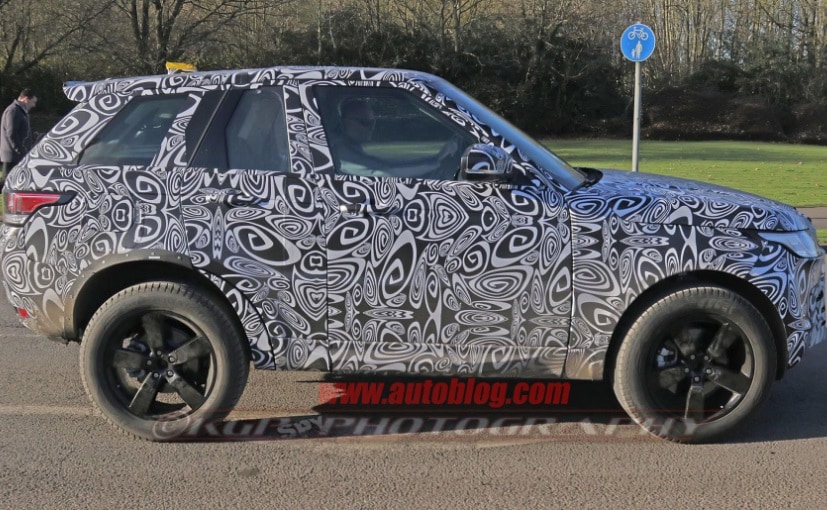
The new Land Rover Defender will continue to carry its tall off-roader stance
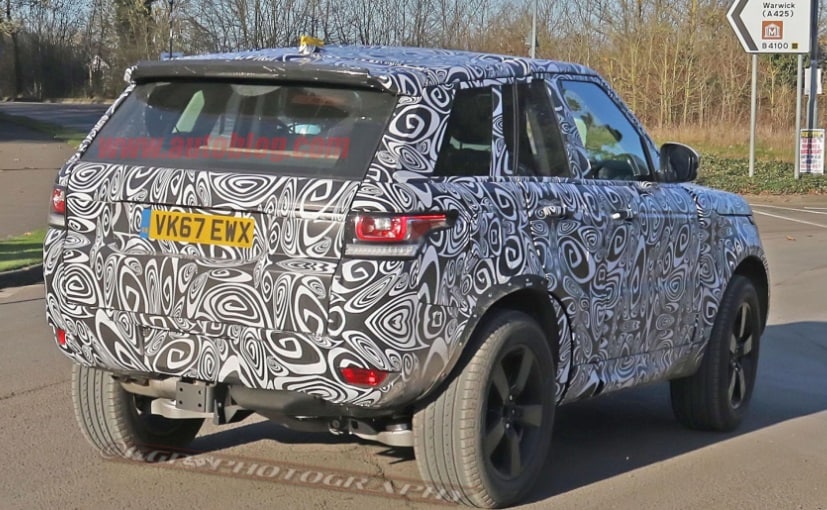
The images of this prototype of the new-gen Land Rover Defender are more than enough to tell us what they meant by polarizing design. Though heavily covered in camouflage, we can still see that silhouette of the iconic off-roader has completely changed and is more in line with Land Rover's latest-gen SUVs. In fact, the front section of the SUV is largely similar to the new-gen Discovery and its younger sibling the Discovery Sport, replacing the boxy profile with curved edges. Up front, the SUV comes with a set of LED projector headlamps surrounded by LED daytime running lamps. The grille and bumper are heavily camouflaged so there is not much to comment on that front, but we expect to see large air intakes.

land rover defender rear
The Land Rover Defender prototype still comes with few makeshift parts
However, once you get a look at the SUV from the sides you'll notice the essence of the Defender. For instance, the test mule comes with a noticeably short wheelbase, with shorter front overhangs and larger ones at the rear. Looking at the stance of the SUV it also appears to come with independent suspension to improve its off-road capabilities, and finally, we have the massive ground clearance which is sure to make the new Defender worthy of its name. At the rear, you get wraparound LED taillamps, which don't look production ready but we can expect a similar design.

It is too soon to comment on engine specifications but we believe that 2-litre Ingenium diesel engine could find its way into the Land Rover Defender family. But we'll get to know more about the next-gen Defender once the company introduces the SUV, which is expected sometime in the second half of 2018 as a 2019 model.
source: auto.ndtv.com